Concrete Pour Checklist: A Simple Guide for Quality Construction
Concrete pour checklist
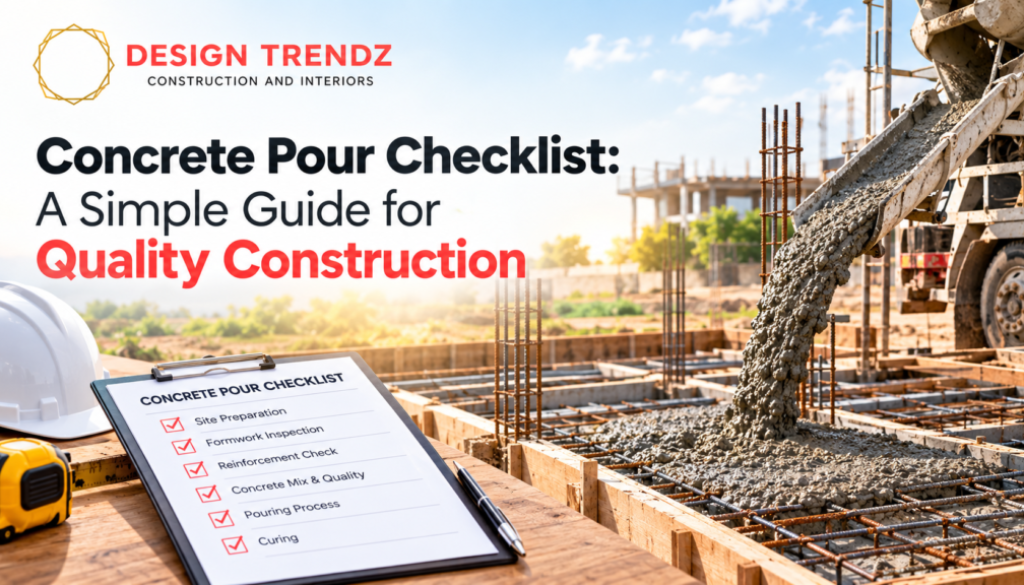
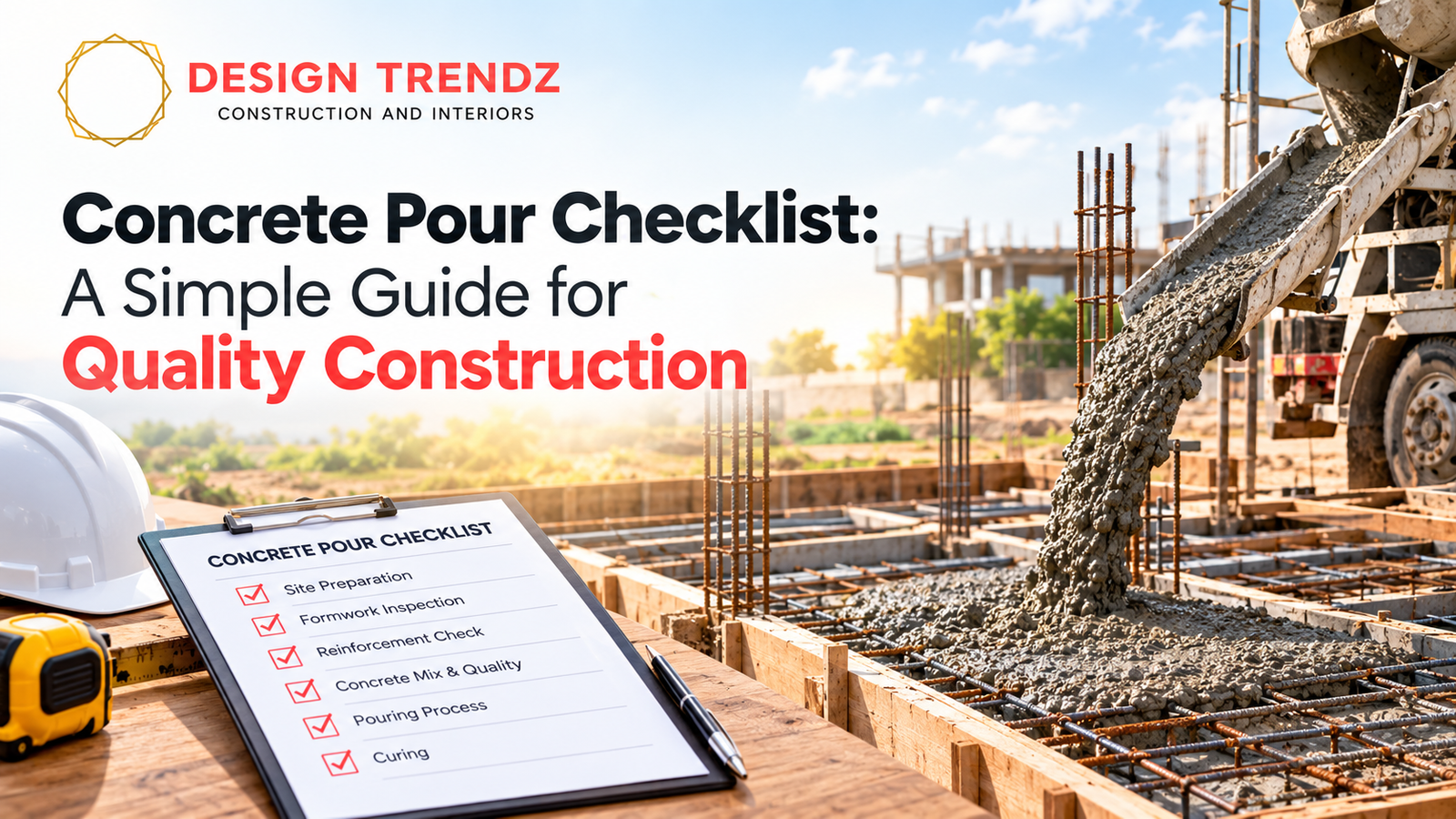
Concrete is one of the major materials used in the building of houses. It is used for structural components like foundations, columns, beams, slabs etc. A good concrete pour checklist will make sure that all the critical work is checked before, during and after pouring concrete.
1. Pouring Zone Check
Prior to the beginning of the concrete work, the pouring area must be clean and well prepared. This allows the workers to lay and finish the concrete without undue difficulties.
A few things to consider:
- Remove loose trash and unwanted material
- Remove standing water
- Check levels and dimensions
- Provide access to the area.
2. Inspect The Formwork
Concrete is poured into forms and held in place until it hardens. It has to be solid, aligned and well supported.
Search for these things:
- Verify that the alignment and levels are correct.
- Make sure supports are solid.
- Search for holes and openings.
- Clean the form inside and outside.
3. Check reinforcement bars
The RCC structures are provided with reinforcement steel. Before concrete pour starts it needs to be checked carefully and corrected properly.
Check these points:
- Check the size of the bar and distance between the bars
- Number of reinforcing bars
- Check lap length.
- Check that the bars are tied correctly.
- Structural drawings comparison
4. Confirm Cover Blocks
The covers provide the required distance between the concrete surface and the reinforcement. And they help protect steel reinforcement against moisture and corrosion.
Look at these points:
- Cover block of adequate size
- Put the blocks where they belong
- Make sure they are firmly in place
- Keep reinforcement clear of formwork
5. Electrical and Plumbing Testing
All electrical work, plumbing pipes, sleeves and other embedded items shall be installed in conduit prior to pouring of concrete. So you don’t have to snap it or cut it later.
Take a look at these:
- Be sure the electrical conduit is properly placed.
- Inspect the plumbing pipes and sleeves.
- Check all required openings.
- Secure well embedded items.
6. Inspect the Concrete Mix
The concrete mix shall be designed to satisfy the requirements of the project. The proper grade of concrete shall be used for the desired strength and durability of concrete.
Here are the points:
- Check the grade of the concrete.
- See mixing specifications
- Check cement and aggregate requirements.
- Check for admixture (if needed).
- Confirm delivery of ready mix.
7. Availability of Construction Equipment
Make sure every piece of equipment is ready before the concrete gets on site. Concrete pour process delays can be avoided by preparing for it.
Standard equipment includes:
- Concrete-pump or concrete mixer
- Needle, vibrator
- Dollies
- Bucket
- Levelling tools
- Finishing tools
8. Create the Work Team
Before concrete is placed, there should be adequate numbers of workers. Every worker should be aware of their role in placing and finishing concrete.
The team should be ready for:
- Concrete placement
- Convergence
- Topping
- Finishes
- Monitoring of the formwork
9. Check the weather conditions
Fresh concrete is affected by the weather, especially in very hot conditions or heavy rain. Before you begin pouring your concrete, be sure to take the proper precautions.
Before pouring:
- Look at the weather report.
- Keep concrete dry in periods of heavy rain.
- No heat, Take precautions during hot weather.
- If needed, cover properly.
10. Proper Concrete Pouring
Concrete should be placed uniformly in the form work. If you position correctly you can make sure everything is even and you will have less chance of defects in construction.
While you’re at it:
- Add in the order of schedule
- Don’t spend your time
- Level out concrete
- Keep a close watch on the formwork.
11. Compaction of Concrete
Fresh concrete will contain entrapped air, and should be properly consolidated. A concrete vibrator makes it easier to remove air and allows the concrete to fill the formwork correctly.
Vibration in right way is good for:
- Air bleed
- Increase the density of the concrete
- Grouting spaces around reinforcement.
- Cut back on honeycomb
If the vibration is too much, it can be bad for the concrete mixture.
12. Check levels and finish off
After the concrete has been poured and compacted properly, the surface must be finished and levelled. Accurate levels are particularly important on slabs and floors.
Check these things:
- check the required level
- Get the pitch right
- Surface prep is critical
- Corner and edge finishes look at the face at the end.
13. Start Curing Immediately
After placing concrete, curing is an important step. This provides the moisture needed for the concrete to gain strength and helps control shrinkage problems.
Key points:
- Start the cure at the right time.
- Maintain moisture in the concrete.
- Treat as directed.
- Treatment for a short time
14. Maintain Concrete Pour Record
Monitoring major concrete pours is also a good way to monitor the quality of the construction. It also provides useful information for future inspections and the project file.
Items to record, such as:
- Date and time of casting
- Pour point
- Concrete quality
- Concrete Volume
- Supplier info
- Environmental Factors
- Details of testing
Why you need a checklist for pouring concrete
A concrete pour checklist helps the construction team identify problems before pouring concrete. This puts a little order in the pouring process and means less chance of missing some of the important checks.
It helps to:
- Minimize construction errors
- Enhance the quality of concrete
- Decrease rework
- Reduce waste of materials
- Improved site co-ordination
- Help with quality control
Proper concrete supervision helps home owners who are planning to build a house in Hyderabad to maintain the construction quality and also increase the durability of the structure.
Conclusion
Proper planning of concrete pouring should be done at all levels. Also check the formwork, reinforcement, material, and equipment, placement, compacting, finishing and curing.
A basic checklist for concrete pouring reduces errors and improves construction quality. With a good plan and professional supervision you can build a good and lasting home.
What you think which option is better Building a house or Buying a ready to move house? Get the clarification by reading this blog.