Waterproofing Mistakes: Common Errors to Avoid When Building a House
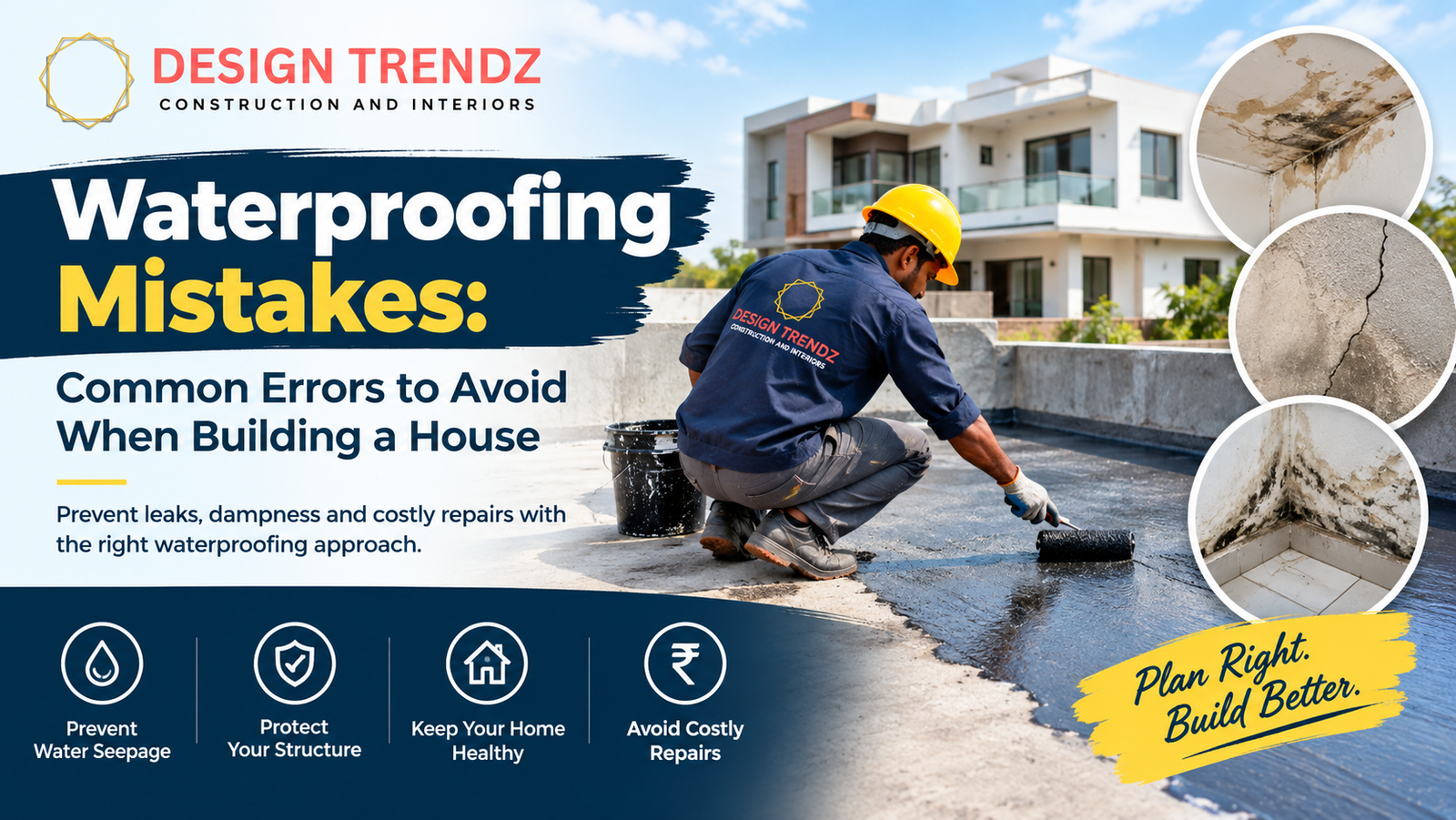
Waterproofing is one of the most important elements in building a house. A properly designed waterproofing system prevents water leakage, dampness, mold and structural damage to a building. But even a good construction project can get into trouble if water-proofing is not properly planned and executed. Repairing water leakage after the building is complete can be difficult and expensive.
Not Choosing Right Construction Package also Effect and Leads to these kind of Problems. Read our Blog on Different Construction Package to have the clear understanding of Construction Packages and choose the right Package.
Why do you need waterproofing?
Water can get into a building through its roof, bathrooms, balconies, walls, foundations and plumbing areas. Finishes can be damaged and damp unhealthy conditions can be created by continual exposure to moisture.
Good water-proofing helps prevent:
- Water seepage
- Damp walls
- Flaking paint
- Mold & Mildew
- Stains on ceiling
- Damage to tile and plaster
- Deterioration of concrete
- Damage to the insides
Therefore, waterp-roofing the house should be regarded as an integral part of the construction, not an optional finishing activity.
Waterproofing Mistakes
1. Not Planning to Waterproof during Construction
One of the most common mistakes is to only think of water-proofing when leakage happens. Waterp-roofing should be thought about at the design and construction stage. Do not work until water exposed areas are identified.
The key areas include:
- Terrace & Roof
- Bathrooms
- Balconies
- Kitchen
- Cellars
- Outer walls
- Fundaments
- Water tanks
- Utility areas
Planning early allows the construction team to choose the right water-proofing methods and materials.
2. Selecting Poor Quality Waterproofing Materials
Problems can be caused in the long run by using cheap or unsuitable water-proofing materials. Choose material according to the location and type of water exposure.
For instance, the water-proofing for a terrace may require a different system than the water-proofing for a bathroom.
The selection should take into account:
- Condition of surface
- Exposure to water
- Weather
- Construction type
- Expected longevity
- Compatibility with other materials
You can get help to choose a suitable system from a professional water-proofing contractor or an experienced construction company.
3. Inadequate Surface Preparation
Water-proofing products only work if the surface they’re applied to has been properly prepared. A dusty, uneven, cracked or contaminated surface may compromise the effectiveness of a water-proofing coating applied over it.
Before application, the surface should normally be:
- Clean
- Dry or prepared as suitable for the product
- Absence of loose particles
- Properly fixed
- Even and well-finished
Before the application of the waterproofing system, repair cracks, gaps and damaged areas.
4. Cracks and Joints are Ignored
Small cracks and construction joints can act as channels for water. Water-proofing coatings over the top are not always the answer to the problem underneath.
Of special interest are the following points:
- Wall-floor junctions
- Joints in building
- Pipe outlets
- Expansion joint
- Corners
- Concrete cracks
- Gaps around fittings
Often these areas need to be properly detailed and incorporated into the overall water-proofing solution.
5. Improper Bathroom Waterproofing
Bathrooms are always exposed to water and water-proofing of bathrooms is very important. Common mistakes include only water-proofing the visible floor and neglecting other vulnerable areas.
Bathroom waterproofing should properly consider:
- Floor space
- Wall-floor junctions
- Shower Rooms
- Pipe penetrations;
- Drainage holes
- Corners
- Wet area walls
The water-proofing system should also be coordinated with the plumbing and tile work.
6. Bad Terrace Waterproofing
The terrace is open to the rain, sun and changes of temperature. Bad water-proofing of the terrace can cause water to enter the ceiling or top floors.
Common mistakes are:
- Incorrect surface slope
- Blocked drainage outfalls.
- Bad pipework
- Poor surface preparation
- Wrong application Not considering cracks
Standing water also increases the risk of leakage, so proper drainage is even more important.
7. Improper drainage slope
Water-proofing alone cannot make up for poor drainage. Water should be channeled away to suitable outlets and not left on the surface.
A well designed slope will:
- Drain rain water
- Do not let water stagnate
- Keep water repellent layer
- Minimize leakage risks
- Increase terrace performance
Hence, drainage planning should be considered along with the water-proofing system during roof water-proofing.
8. Wrong Use, Waterproofing
Even the best water-proofing material can fail, if not applied properly.
Mistakes in the application may include:
- Wrong mixing ratios
- Irregular coating thickness
- Not enough jackets
- Improper curing
- Using products under wrong conditions
- Not adhering to manufacturer instructions
The water-proofing system shall be installed in accordance with the product specifications and project requirements.
9. Plumbing Leakage Ignored
Not all water leakage problems are due to failed water-proofing. Dampness can also be caused by leaking pipes, joints, traps and plumbing fixtures. Before water-proofing repairs are made, the source of the moisture should be identified.
Check it:
- Water pipes
- Drainage pipes
- Bathroom fixtures
- Traps in the floor
- Kitchen plumbing
- Storage tanks
- Connections for external plumbing
Identify the real source and prevent unnecessary water-proofing work.
10. Bypassing Waterproofing Tests
A common mistake is to finish water-proofing without verifying that the system is working properly. Testing can identify problems before tiles, plaster, paint or other finishes are applied.
Depending on the area and system, appropriate tests may be performed for:
- Bathroom floors Terraces
- Water tanks
- Wet areas
- Water connectors
- Early detection allows for repairs and can prevent damage to finished surfaces.
11. Too Soon Covering Waterproofing
Water-proofing systems may require a specific period for curing or drying before the next layer is applied. If you cover the surface too soon it will affect the performance.
The construction team needs to wait for the recommended time and permit for proper curing before proceeding with the:
- Tiling
- Screeding
- Plastering
- Flooring
- Protective layers
Rushing this stage can create problems you could avoid.
12. Choosing a Contractor with Limited Experience
Water-proofing requires proper preparation, material selection, application and detailing. Going for the lowest price first could mean hiring an inexperienced contractor who will cost you later for repairs.
When choosing a contractor or construction company look for:
- Water-proofing experience
- Projects completed
- Material Specs
- Working method
- Test procedures
- Terms of Service or Disclaimers
- General experience on projects
Good workmanship is a key element of a successful water-proofing system.
13. Ignoring Exterior Walls
Water ingress can also come from external walls, particularly during heavy rain on walls.
Consider external wall waterproofing if there is:
- Cracks
- leaky holes
- Exterior finishes with damage
- Water ingress
- Spaces around windows
- Joints badly treated
Proper exterior maintenance and waterproofing treatments can help minimize moisture penetration.
14. Leakage Handling: Internal only
Some homeowners, when water appears on an interior wall or ceiling, just put paint on it, or use an internal water-proofing coating. This can temporarily hide the visible issue, but not the cause.
For example, a stain on the ceiling could be caused by:
- A bathroom with a leak up
- Water ingress on a terrace
- Plumbing Leaks
- Cracks
- Bad Drainage
Cosmetic finishing work should not be performed until the source is identified and repaired.
How to Avoid Waterproofing Errors
Good waterproofing process needs proper planning and professional execution.
Just follow these simple steps:
- Find all areas where water is present.
- Choose the Right Waterproofing Materials.
- Prepare surfaces correctly.
- Cracks, joints and pipe penetrations should also be treated.
- Be sure slopes drain well.
- Directions for use.
- Allow sufficient curing time.
- Carry out the required water tests.
- Protect the water proof layer from damage
- Perform periodic inspection and maintenance.
- Waterproofing When You Build Your House
The best time to deal with waterproofing is in the planning and construction stages. Combining waterproofing with structural work, plumbing, drainage, flooring and finishing can reduce the potential for future problems.
Conclusion
Proper planning, quality materials, skilled workmanship, good drainage, surface preparation and testing are the keys to effective house waterproofing.
When given the proper attention for waterproofing during construction, homeowners can improve the durability, comfort and long-term performance of their property.
If you need any Construction or Architecture services, feel free to contact us.